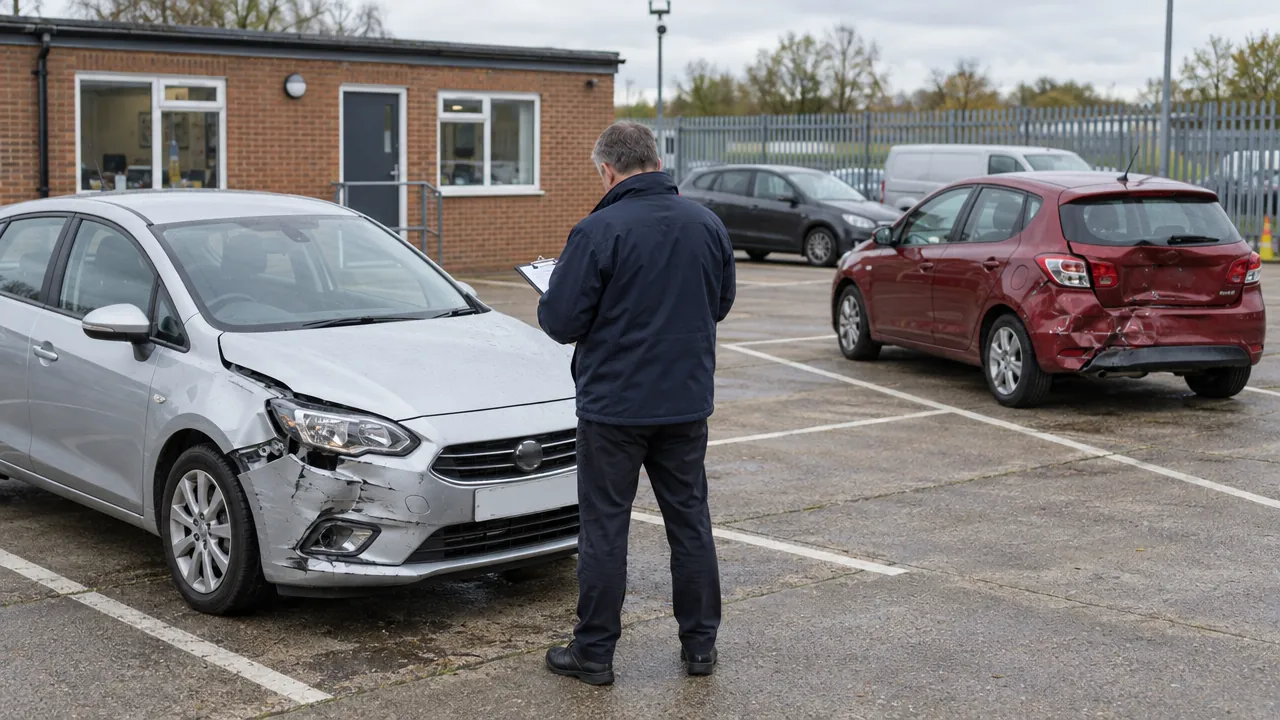
If your car is stolen or damaged beyond economical repair, the insurer’s settlement may differ from what you paid for it. Most conventional policies base a total-loss settlement on the car’s market value immediately before the loss. Some specialist policies instead use a value agreed with the insurer in advance.
The distinction matters particularly for classic, rare, modified or unusual vehicles. It also matters if you have finance outstanding: neither the purchase price nor the amount you still owe automatically determines a market-value payout. The starting point is to check which basis your policy uses.
What is market value?
Market value is what your particular car was worth immediately before it was stolen or damaged. If you have a conventional comprehensive policy and the vehicle is written off, the insurer will normally use that value to calculate its settlement. It is not necessarily the amount you paid for the car.
Suppose you bought a new car for £30,000 three years ago and it is now worth £18,000 on the used-car market. If it is stolen and not recovered, the insurer will normally assess its value immediately before the theft, rather than refunding the original £30,000 purchase price.
The same principle applies if you paid more than the typical market price for a used car. What you paid does not automatically become its insured value, although a very recent purchase price can be relevant evidence when establishing what the vehicle was worth.
How is a car’s market value assessed?
Insurers generally use specialist motor valuation guides to work out a vehicle’s value immediately before it was lost. The assessment should reflect the actual car, including its age, mileage, specification and condition. For a mainstream car, there is usually enough market data to support a reasonable valuation.
An older, rare or unusual vehicle can be harder to assess using a guide. There may be little or no useful guide data for a particularly rare classic, a heavily modified car, a specialist conversion or an unusual import. In those cases, other evidence becomes more important.
That evidence might include adverts for comparable vehicles, an independent expert valuation or information about the car’s particular specification and condition. Comparisons are most useful when the vehicles really are alike: an ordinary example of the same model may not reflect the value of an unusually specified car.
Is market value the figure entered on an insurance quote?
Not necessarily. When applying for insurance, you may be asked what you think your car is worth. Entering £20,000 does not, by itself, mean the insurer has agreed to pay £20,000 if it is later written off. On a market-value policy, the insurer will normally assess its value immediately before the loss.
The figure you supplied with your application may still be relevant, but it is not automatically a guaranteed settlement. Agreed-value cover is different because the value is established with the insurer in advance. If you are unsure which arrangement you have, check the policy wording rather than relying on the amount entered on the quote.
Is market value the same as an outstanding finance balance?
No. The car’s value and the amount owed under a finance agreement are separate figures. You might owe £20,000 when a vehicle worth £17,000 is written off. A conventional market-value policy does not automatically add the extra £3,000 to its settlement because that amount remains payable to the finance company.
This potential difference is one reason GAP insurance exists. It is separate from the underlying motor policy and is designed to address a specified shortfall, subject to its own terms. The type of GAP cover determines which figure is compared with the motor insurer’s settlement; it does not change how the car’s market value is assessed.
Can the car’s condition reduce its valuation?
Yes, if its condition genuinely affected what it was worth before the loss. Significant pre-existing damage could make it less valuable than an otherwise comparable car, and the insurer may take that into account. Any deduction should be reasonable and supported by evidence, rather than applied without regard to the vehicle’s condition.
Ordinary wear and tear is not necessarily the same as significant damage. A few small scratches might noticeably affect a nearly new car’s value, while similar marks could be fairly normal on a much older one. The effect of a defect therefore depends partly on the sort of vehicle being valued.
Mileage can also make a difference to market value. When reviewing an insurer’s assessment, check that it has used the correct mileage as well as an accurate description of the car’s condition. Incorrect vehicle details may produce a valuation that does not reflect your car.
What if the insurer’s valuation seems too low?
You do not necessarily have to accept the first figure without asking how it was reached. Request an explanation and check the details the insurer used, particularly the model, trim level, engine or powertrain, age, mileage and specification. Point out any errors that could affect the valuation.
You can gather evidence by looking for genuinely comparable cars currently advertised for sale. Pay attention to their age, mileage, specification and condition, rather than selecting only the highest-priced cars that look broadly similar. A different trim or substantially different mileage can make an advert less useful.
Adverts can support your case, but an asking price is not necessarily the price at which a car eventually sells. For a particularly rare or unusual vehicle, an independent expert valuation may also help explain why an ordinary guide figure is inadequate. The aim is to provide evidence about your particular vehicle.
If you still consider the valuation unfair, make a formal complaint to the insurer. If the complaint is not resolved satisfactorily, you may then be able to refer it to the Financial Ombudsman Service. The Ombudsman publishes guidance on how it approaches disputes about vehicle valuations and write-offs.
What is agreed value?
With an agreed-value policy, you and the insurer establish the car’s insured value before a claim, rather than leaving the insurer to determine its ordinary market value after a loss. For example, a rare classic might have an agreed value of £30,000. If it is later stolen or written off and the claim is valid, the settlement should be based on the value recorded in the policy.
That arrangement gives the owner more certainty about the value used for a total-loss claim. It is not particularly common for ordinary mainstream cars; it is more often associated with classic, valuable, unusual or specialist vehicles. An agreed value must be accepted by the insurer and documented as part of the cover.
How is an agreed value decided?
The process depends on the insurer and the vehicle. An insurer might request photographs, details of specification and condition, receipts for restoration or modifications, or an independent valuation. These can help establish why a particular car is worth the proposed amount, especially when there are few comparable vehicles.
For a classic or collector’s car, provenance, originality, rarity and condition can significantly affect value. Two examples of the same model and age may therefore be worth different amounts. Information about the individual car matters when an ordinary model-level estimate does not capture those differences.
The insurer must accept the proposed figure. Deciding for yourself that a car is worth £50,000 does not turn a policy into agreed-value cover. Check what evidence is required and whether the agreed amount is clearly recorded in the policy documents; a value mentioned during an application is not necessarily an agreed value.
Can an agreed value change over time?
Yes. Reviewing it matters particularly for classic and collector cars, whose values can move significantly. Suppose you agree a value of £25,000, but by the next renewal comparable cars are selling for substantially more. Renewing at the same £25,000 could leave you underinsured if the car is subsequently lost.
The wider market can also fall after a value has been agreed. Review the amount at each renewal, and tell the insurer about anything that could significantly affect it, such as a major restoration or modification. An amount that once reflected the car may not continue to do so as the car or its market changes.
Which cars might benefit from agreed-value cover?
For most mainstream cars, conventional market-value insurance is suitable: there is generally enough market information to establish what they were worth before a loss. Agreed value becomes more relevant when standard valuation methods may struggle to capture the features that make an individual vehicle valuable. Its usefulness depends on the car, not simply its age or purchase price.
Classic and collector cars
Condition, history, originality and provenance can give two cars of the same age and model very different values. A rare specification or an exceptionally well-preserved example may be worth much more than an ordinary one. Those differences make classic and collector cars candidates for an agreed value established with the insurer in advance.
Modified and restored cars
Substantial restoration or modification can also make specialist agreed-value cover worth considering. The amount spent on the work does not necessarily translate into the same increase in market value: a change that appeals to one potential buyer may make the car less desirable to another. Evidence of the work can help explain a proposed valuation.
Declare relevant modifications to your insurer as well as discussing the car’s value. An agreed-value discussion is not a substitute for giving the insurer details of changes to the vehicle. Receipts and information about its specification may be among the evidence requested when the value is considered.
Kit cars and unusual imports
Kit cars, specialist conversions and unusual imports may have relatively little mainstream valuation data available. That can make a conventional market valuation difficult, particularly if the vehicle differs substantially from anything listed in a guide. Agreed value provides a way to establish an accepted insured amount in advance where the insurer offers it.
Rare or specialist performance cars
Some rare performance cars vary substantially in value according to their specification, provenance, production numbers and condition. Their values may also move relatively quickly. Those factors can make an agreed amount relevant, while also making it important to review that amount rather than assuming it will remain appropriate indefinitely.
Does agreed-value insurance cost more?
Not necessarily. Agreed-value policies are specialist products, but their premiums depend on more than the insured amount alone. The car, driver, mileage, storage arrangements, use of the vehicle and policy restrictions can all affect the price. The valuation method alone does not show whether a policy will be cheaper or dearer.
Classic-car policies, for example, may operate under conditions quite different from those of everyday car insurance. Compare the overall terms as well as the premium and the stated value. An agreed figure is only one part of the policy; its restrictions also matter to how the car can be used.
Avoid agreeing to an unrealistically low value solely in an attempt to reduce the premium. If the car is stolen or written off, that decision could leave you inadequately covered. A figure agreed in advance is most useful when it properly reflects the vehicle and is kept under review.
What about new-car replacement cover?
Agreed value is not the only possible alternative to a payout based on depreciated used-market value. Some comprehensive policies include new-car replacement cover for relatively new vehicles. If an eligible car is stolen or written off within a specified period, the insurer may replace it with a new equivalent instead of simply paying its current used-market value.
This cover has conditions. Depending on the policy, eligibility can be affected by the vehicle’s age, how long you have owned it and the extent of the damage. It should not be assumed to apply to every relatively new car or every write-off; the policy terms determine whether replacement is available.
Is agreed value the same as GAP insurance?
No. Agreed-value motor insurance fixes the value used by the motor insurer for a valid total-loss claim. GAP insurance is separate cover designed to address a specified difference between the motor insurer’s settlement and another amount. The relevant amount depends on the particular type of GAP policy.
That other amount might be the outstanding finance balance, the original invoice price or the cost of replacing the car with a new equivalent. GAP cover therefore addresses a different question from whether the motor insurer uses market value or an agreed value. Its own terms and exclusions determine what shortfall, if any, it covers.
For example, if your motor insurer values a written-off car at £18,000 while you still owe £21,000 to the finance company, the difference is £3,000. A suitable finance GAP policy may cover that relevant shortfall, subject to its terms and exclusions; the motor insurer’s market-value settlement does not automatically rise to match the debt.