Government guidance on tax, emissions, MOTs and driving lessons is useful, but it rarely makes for entertaining reading. The DVSA’s list of cars you cannot use for a practical driving test is an exception. It brings together tiny city cars, convertibles, panel vans and two Polestars in a combination that looks unlikely until you understand what they have in common.
The central issue is not whether a learner can drive the car safely. The examiner must also be able to see around it. According to the DVSA, some cars cannot be used because they do not give the examiner all-round vision. That simple requirement explains much of the list, even if some of the names and descriptions raise questions of their own.
Which cars are on the DVSA list?
The DVSA names any panel van, the BMW 218 convertible, the BMW Mini convertible, the Ford KA convertible, the Polestar 4, the Polestar 5, the two-door Smart Fortwo, the Toyota iQ and the VW Beetle convertible. Four of the named cars are convertibles; the others range from a small two-seater to models that rely on cameras instead of conventional rear glass.
The list is not exhaustive. The DVSA warns that a model might also be unsuitable because it has not previously been used for a test, or because it may not give the examiner all-round vision. If your car has an unusual shape or restricted visibility, its absence from the list is not confirmation that you can use it. Check before test day rather than assuming the examiner will accept it when you arrive.
Panel vans and the BMW convertibles
The panel-van restriction is relatively straightforward. The DVSA describes the vehicles it means as cars without rear seats or rear side windows. That includes examples such as the Vauxhall Corsavan, Ford Fiesta SportVan and MG Express. Without the rear side windows, the examiner cannot get the view required for the test, regardless of whether the vehicle feels car-like from the driver’s seat.
The wording “BMW 218 convertible” is less straightforward. The car would more precisely be called a BMW 218i, while “BMW 2 Series Convertible” would cover the wider range. The guidance does not explain why it singles out the 218 rather than using that broader name. It may simply reflect which models have come to the DVSA’s attention: the list does not claim that every possible car has already been assessed. You should not infer that an M235i or M240i is approved merely because it is not named.
“BMW Mini convertible” is another curious official description. MINI has been presented as a brand in its own right for more than two decades, yet the DVSA retains the BMW Mini wording. More importantly for anyone planning a test, the guidance does not identify a particular generation or model year, or say whether the restriction depends on the roof being raised. The likely visibility concern is the view past the substantial rear pillars and rollover protection, but the published wording does not resolve those details.
Why the Ford KA convertible is named
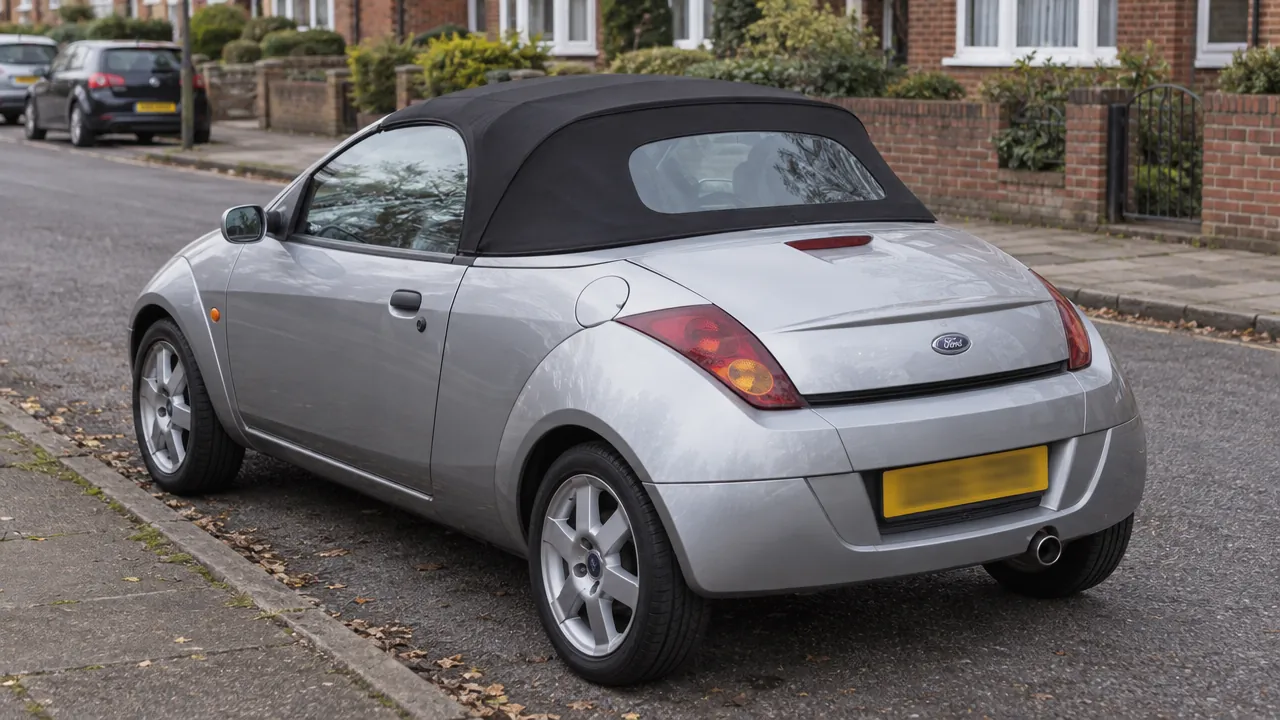
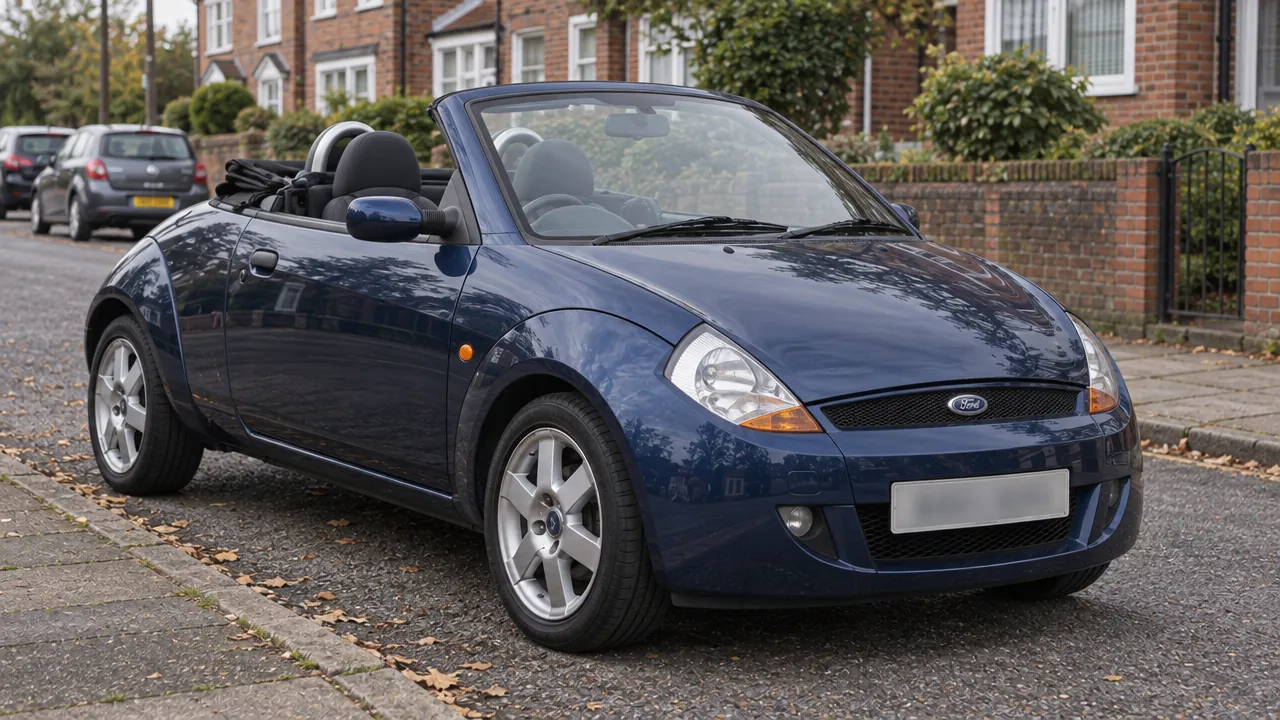
The “Ford KA convertible” is better known as the Ford Streetka. Built from 2003 to 2005, it was based on the original Ford Ka. Ghia designed the concept, Pininfarina engineered and built the production car, and Charlene from Neighbours endorsed it. The DVSA’s plainer name gives the car rather less character, but it makes clear that the convertible is the model under discussion.
With its roof raised, the Streetka’s rear quarters restrict the examiner’s view. That is the relevant distinction from the Ford Sportka, which is not named on the list. A Sportka may therefore be a different proposition for a test, although the DVSA’s warning about unlisted models still makes checking sensible if you are uncertain. A familiar model name or shared mechanical background does not, by itself, answer the visibility question.
Why the Polestar 4 and 5 are included
At a very different end of the market, the Polestar 4 and Polestar 5 have no conventional rear window. Instead, a camera and digital mirror show the driver what is behind. That arrangement can serve the person at the wheel, but it does not give an examiner in the passenger seat the same direct view. Their inclusion shows that a sophisticated solution for the driver does not necessarily meet the needs of a practical test.
It is an unusual pairing: two technologically advanced Polestars appear in the same official list as the Streetka. Their designs differ enormously, but the DVSA’s concern is consistent. The examiner’s ability to observe the car’s surroundings matters independently of the equipment available to the person driving it.
The Smart Fortwo and Toyota iQ
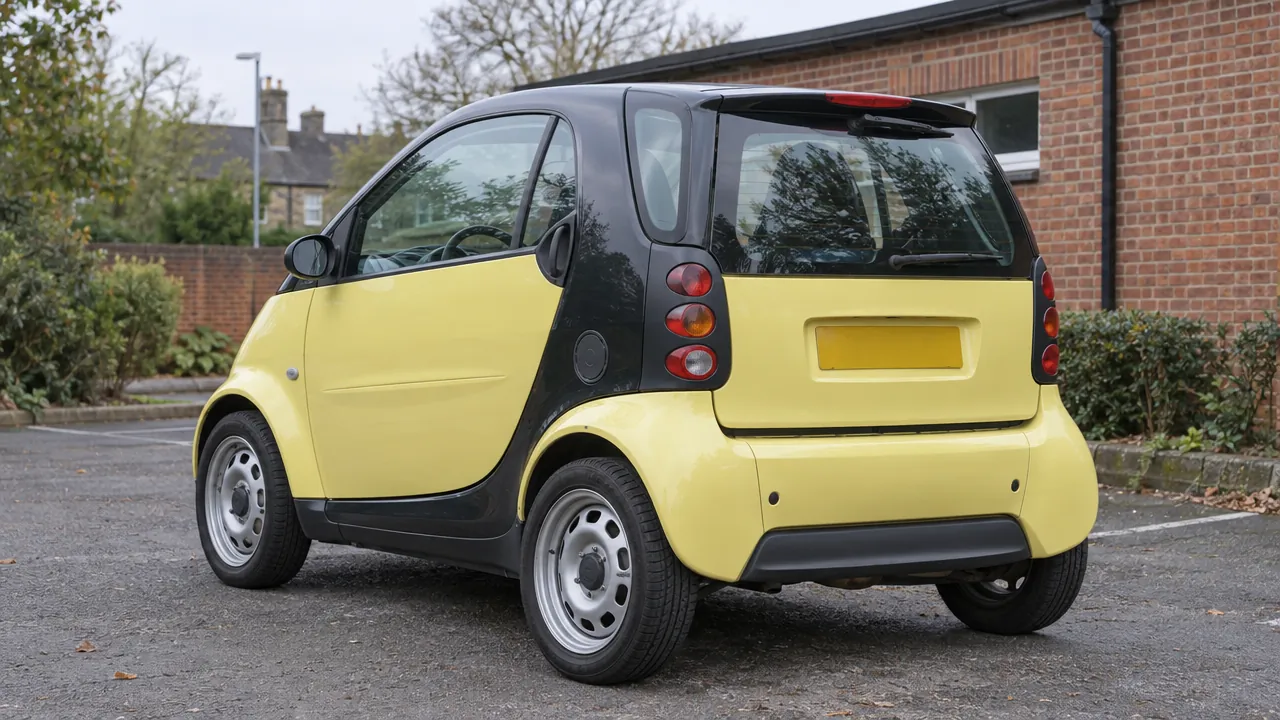
The DVSA specifies the “Smart Fortwo (2-door)”. That parenthetical detail distinguishes it from the four-door Smart Forfour, although the Fortwo was designed for two occupants and has always had two side doors. Its compact size may make manoeuvres feel less daunting, but size alone does not guarantee a useful view from the passenger seat. The Fortwo’s rear bodywork and pillars restrict what the examiner can see.
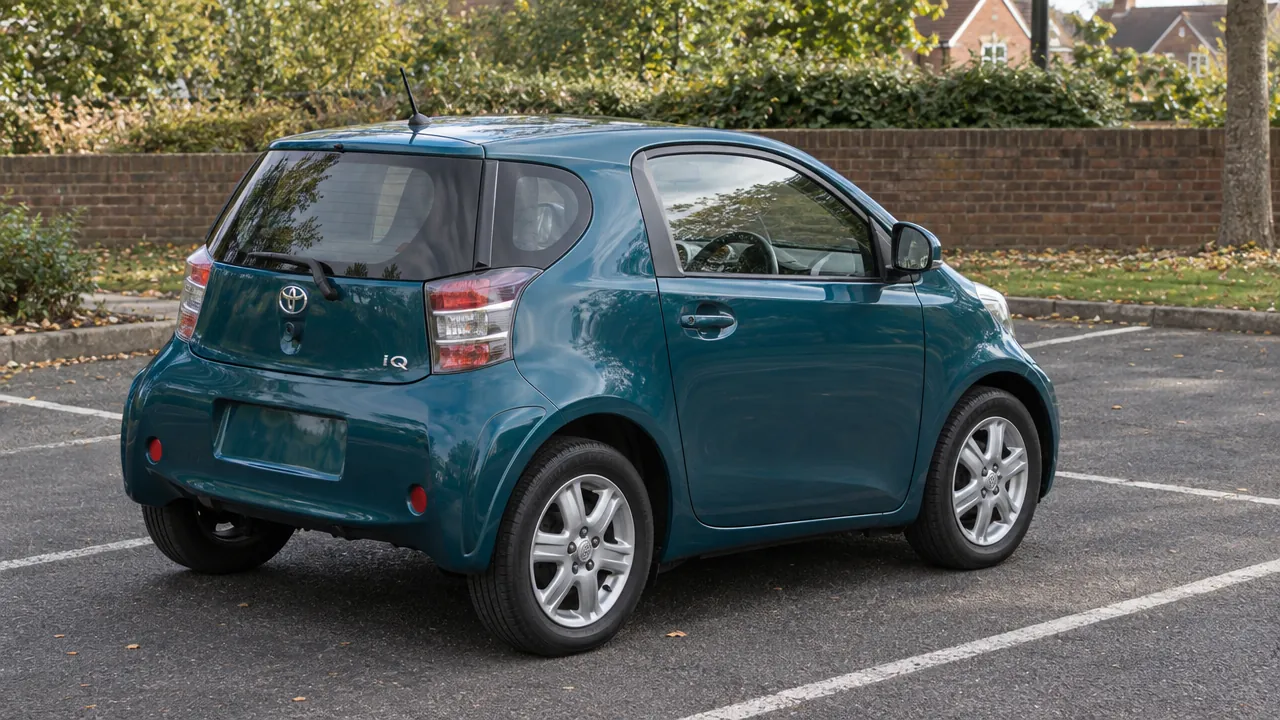
The Toyota iQ is a less obvious candidate. It is very small, with a fixed roof and a conventional rear window: unlike the convertibles, it does not have a folding roof, and unlike the Polestars, it does not substitute a camera for rear glass. At first glance, those features might make it appear well suited to a test.
Its packaging helps explain the difficulty. An asymmetrical dashboard allows the front passenger to sit further forward than the driver, leaving room for a third adult behind. Combine that seating arrangement with thick rear pillars and small rear side windows, and the examiner’s view becomes inadequate. A car that is clever at accommodating people can still make it hard for one of them to see out.
The iQ also raises a question about the Aston Martin Cygnet, which was essentially an iQ given a much more expensive identity. The Cygnet is not named by the DVSA, but the agency expressly says its list does not cover every unsuitable model. Its omission should not be treated as approval. Anyone intending to use one should check first, however unlikely that particular test-day choice might be.
The VW Beetle convertible and other open-top cars
The final named convertible is the “VW Beetle convertible”. The DVSA does not say whether it means the New Beetle Cabriolet launched in 2003, the later Beetle Cabriolet introduced in 2013, or both. As with the MINI, the official description leaves a potentially important question unanswered for someone choosing a specific car.
In a four-seat convertible with the roof raised, thick rear pillars can obstruct the view over a shoulder. What the driver finds inconvenient may leave the passenger-seat examiner without enough visibility to conduct a test. The guidance does not clarify where that leaves other convertibles such as the VW T-Roc Cabriolet or Range Rover Evoque Convertible. The DVSA advises checking before attempting to use any convertible, rather than relying on the absence of its name from the list.
What if you want to use a coupé or your own car?
The DVSA also says to contact your local test centre if you want to take the test in a coupé. For this purpose, it defines a coupé as a car with a fixed roof, two doors and a sloping rear. That definition is more specific than the way the word is sometimes applied to four-door SUVs. If your car fits the DVSA description, ask the test centre before making plans around it.
Visibility is not the only condition when you use your own car. Tinted windows must be legal, and the test could be cancelled if the rear glass is too dark for the examiner to see through. Remove rubbish from the dashboard, footwells, door pockets, cupholders and seats. Leftover food belongs outside the car, not beside the examiner during a test.
The car must also be smoke-free, so do not smoke in it immediately before the appointment. Certain Citroën and DS models affected by the airbag recall cannot be used unless you can prove the car is safe. These requirements are separate from whether a model appears on the visibility list: passing one check does not remove the need to meet the others.
Before using any car that might be affected, consult the DVSA’s guidance on using your own car for a test. The requirements can change, and the published list itself is not exhaustive. Whether the proposed test car is a Streetka, an Aston Martin Cygnet or an 871bhp Polestar 5, confirming that it is acceptable beforehand is safer than finding out at the test centre.