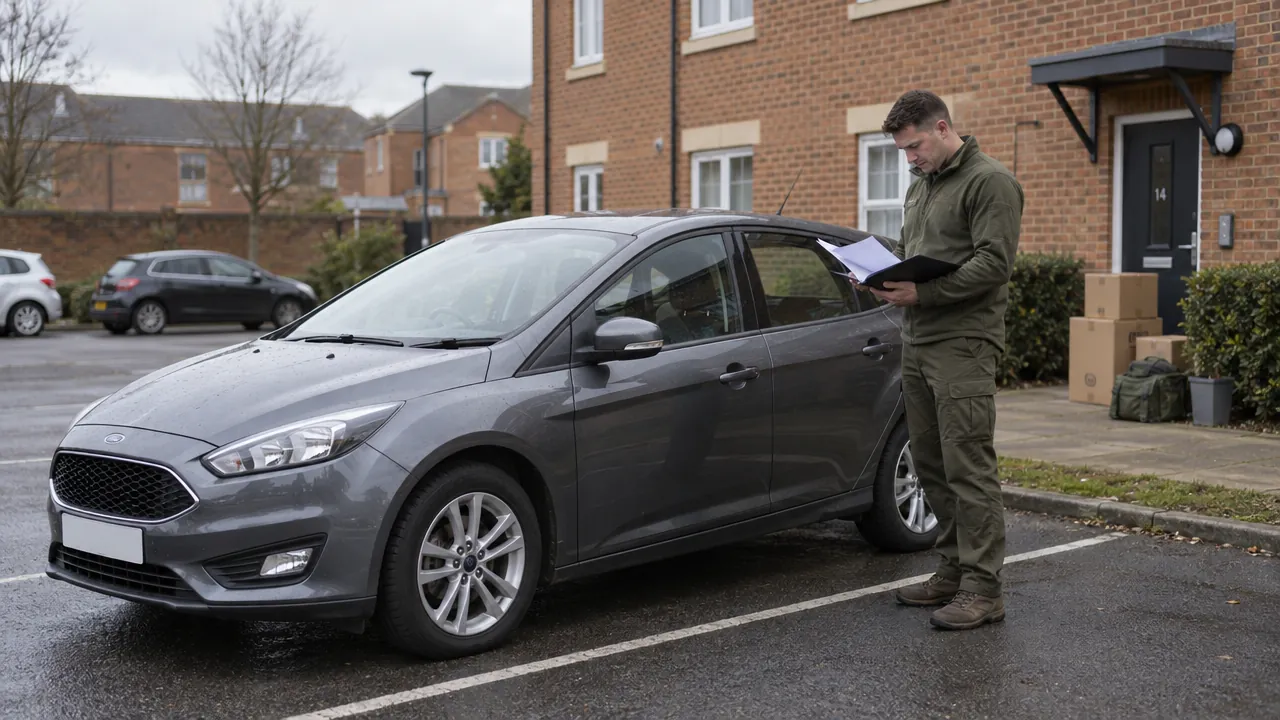
Military service can involve frequent moves, changing working hours and periods away from home. Those circumstances can make choosing car insurance less straightforward than it is for someone with a fixed routine. Service personnel need to consider whether a policy reflects where they keep their car and how they use it. Checking the terms, rather than assuming a standard policy fits every situation, can help them assess the cover available.
Changes of address
Service personnel may move between bases or be assigned to other parts of the UK. A change of address can affect the information an insurer needs, particularly if the vehicle will usually be kept or used somewhere different. After a move, the policyholder should check whether the details on their policy need updating.
The relevant information is not necessarily limited to a correspondence address. Describing where the car is commonly kept and used helps the insurer assess the current arrangement. It is worth checking these details whenever a move changes the vehicle’s usual location.
Working patterns and car use
Military working hours may involve travel at unusual times or periods away. Consequently, a service member’s vehicle may not be used in the same way as a regular commuter’s car. How frequently it is driven, and where it is usually kept, are relevant when considering suitable cover.
When requesting a quotation, service personnel should give accurate information about how they use the vehicle. They should also compare the policy terms with their actual routine, especially if their working pattern has changed since they last provided those details.
Deployments and extended absences
A deployment may leave a car unused for an extended period. That raises a question about how the insurance applies while its owner is away and cannot drive it. Service personnel should review their policy’s terms and conditions and ask their insurer how they apply during the absence, rather than assume that non-use settles the matter.
Clarifying any requirements before leaving can help avoid complications later. The important point is to establish what the existing policy requires for the particular vehicle and period away, not to presume that every deployment calls for the same arrangement.
Parking arrangements
A car may normally be parked at home, on a military base or in an assigned parking area. Its usual parking location can form part of an insurer’s risk assessment. Giving accurate information about that location is therefore relevant to arranging cover, even when the driver and vehicle remain unchanged.
A relocation may also change where the car is left when it is not being used. If the normal parking arrangement changes, the policyholder should check whether the insurer needs to be notified and update the details where necessary.
Overseas postings and travel
Some UK service personnel work outside the country. A UK car insurance policy may have particular conditions for international travel, so drivers should seek clarification before driving abroad. The destination, length of stay and purpose of the trip can matter when establishing what the policy provides.
Checking the limits and conditions in advance may reveal a potential gap in cover. Service personnel should not assume that the arrangements applying to their usual driving in the UK will apply in the same way to a journey or posting overseas.
Comparing more than the price
Cost is an important consideration when comparing car insurance, but it is not the only one. Service personnel should also examine the level of cover, excess, exclusions and other policy conditions. A policy with a lower price may not offer the flexibility they need if their circumstances change during service.
Comparing those details helps identify cover that reflects the individual’s situation rather than relying on a standard arrangement. Accurate information about vehicle use and location matters when obtaining a quotation; reading the terms helps establish what the policy does and does not cover.
Keeping cover relevant
Relocations, deployments, changes in working patterns and new parking arrangements can affect insurance needs after a policy begins. Service personnel should revisit the information they have given their insurer when circumstances change and check whether their cover still suits how they use and keep the car. If a condition is unclear, asking how it applies to the specific change is more useful than making an assumption.