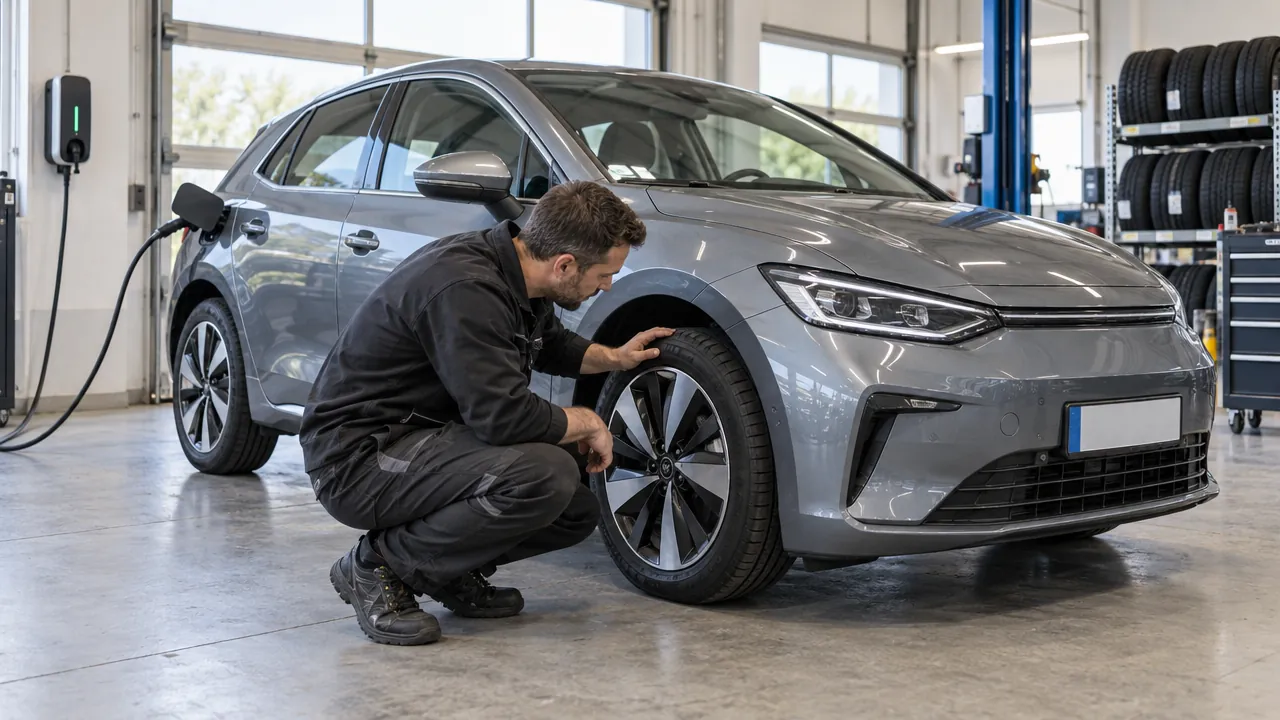
Living with an electric car brings a few things to learn, but tyres might seem unlikely to be one of them. After all, tyres fitted to electric vehicles look much like those on petrol and diesel cars. So do EVs really need a different kind of tyre, or can you choose an ordinary replacement?
There is no legal requirement to fit tyres marketed specifically for electric cars. Many EVs use tyres that are also suitable for petrol, diesel or hybrid models. Still, an electric car’s weight, power delivery and emphasis on efficiency and low noise can make tyre choice particularly important. The question is not whether a tyre carries an EV label, but whether it suits your car and meets its manufacturer’s specifications.
What is different about tyres for electric cars?
Weight is the most obvious consideration. Electric cars carry large battery packs and are often heavier than comparable petrol or diesel cars. That puts more load through their tyres and can increase wear if a tyre is not designed to cope with it. Tyres suited to heavier EVs may have stronger construction or stiffer sidewalls to handle the additional load.
Whatever type you buy, it must meet at least the minimum load and speed ratings specified for your car. A tyre that cannot properly support the vehicle’s weight can affect handling, wear and safety. Check the required ratings rather than assuming that any tyre in the correct size will do, or that an EV marking automatically makes it suitable.
Power delivery matters too. An electric motor can produce strong torque almost instantly, putting substantial pulling force through the tyres as soon as you accelerate. The effect varies with the car and your driving. A modest electric hatchback driven gently will not place the same demands on its tyres as a heavy, powerful electric SUV repeatedly accelerating hard from traffic lights.
Do electric cars wear out tyres faster?
They can, but it would be misleading to say that every EV gets through tyres quickly. Extra weight, strong acceleration and high power outputs can all add to wear. Driving style also makes a considerable difference: regularly using the car’s full acceleration will usually wear tyres faster than accelerating smoothly, even if both drivers have the same model.
Regenerative braking changes how an electric car slows down, but it does not remove the tyres’ role. They still have to grip the road so the vehicle can decelerate. A heavier vehicle has more mass to control, whether the slowing force comes from conventional brakes, regenerative braking or a combination of the two. It is therefore worth thinking about grip as well as acceleration when considering tyre demands.
Tyre pressure is another important part of the picture. Underinflated tyres wear more quickly and create more rolling resistance, reducing efficiency too. Check your car’s recommended pressures regularly rather than waiting for a warning. Keeping the tyres at the specified pressures helps you avoid adding unnecessary wear and resistance, regardless of whether the tyres are sold as EV-specific products.
Why does rolling resistance matter?
A tyre resists motion as it rolls along the road. This rolling resistance takes energy for the car to overcome, so reducing it can lower an electric car’s energy consumption and increase its driving range. Many tyres aimed at EVs use compounds and construction intended to limit rolling resistance without giving up too much grip or durability.
Efficiency is only one consideration, however. A tyre also needs to brake well, grip in wet weather, handle properly and offer acceptable wear. Choosing entirely on the promise of lower energy use would overlook those other jobs. The best choice is a balance that fits the car, rather than simply the tyre with the strongest efficiency claim.
Tyre labels provide a useful starting point for comparison. They show ratings for energy efficiency, wet grip and external noise, allowing you to look at more than one characteristic before buying. Compare those ratings alongside the size and specifications your car needs; a favourable efficiency rating does not override a requirement for the correct load or speed rating.
Are tyres for EVs quieter?
At lower speeds especially, an electric motor is much quieter than a petrol or diesel engine. With less engine noise to mask it, tyre noise may be more noticeable inside the cabin. Some tyres designed with electric cars in mind use particular tread patterns, compounds or internal foam to reduce road noise.
Such a tyre will not turn a noisy car into a silent one. On some models, though, the reduction can be noticeable, particularly when driving on coarse road surfaces. Noise is therefore a reasonable factor to consider when comparing suitable tyres, alongside efficiency, grip, wear and price rather than instead of them.
Must replacement tyres be marked for EV use?
Not necessarily. Some manufacturers sell ranges expressly marketed for electric cars. Others make tyres suitable for EVs, hybrids and combustion-engined cars alike. What matters is whether the replacement matches the size, load rating, speed rating and any other specification required by the car manufacturer for your particular model. Neither an EV label nor its absence answers that question on its own.
Some electric cars use manufacturer-approved tyres developed specifically for that vehicle. These can have particular sidewall markings and may differ in compound or construction from a tyre that otherwise looks similar. Before ordering replacements, check the specification of the tyres already fitted and the manufacturer’s recommendations, especially if your car calls for an approved version.
A tyre without obvious EV branding should not be dismissed if it meets those requirements. Equally, a tyre promoted for electric cars is not automatically the right one for every EV. The decision needs to be based on your vehicle’s specifications and what you want from the tyre, not its marketing description alone.
Why do some EVs use tyres shared with other cars?
There is no single, universal category of EV tyre. A tyre that works well on an electric car might work equally well on a petrol, diesel or hybrid model. A manufacturer may also specify one tyre for several versions of the same car, rather than using a separate product for its electric version.
Tyre makers have increasingly developed products with electric cars’ demands in mind without always presenting them as EV-only. Low rolling resistance, substantial load capacity and reduced noise can benefit other vehicles too. Sharing those features does not make a tyre unsuitable for an EV; meeting the particular car’s requirements remains the deciding point.
Are electric-car tyres more expensive?
Sometimes. Tyres designed to support heavier vehicles, reduce rolling resistance or limit noise can cost more than basic alternatives, particularly in larger wheel sizes. Premium electric cars also often have wide, low-profile tyres. Those are expensive regardless of whether the vehicle is electric, so a high replacement price is not necessarily down to EV-specific design.
Purchase price is not the whole cost. A cheaper tyre that wears out quickly may ultimately cost more than a pricier tyre that lasts longer. Compare suitable options with wear and durability in mind, as well as their efficiency and grip ratings. The lowest initial price is not automatically the most economical choice over time.
Availability is worth considering as well. If your car needs an unusual tyre size or a manufacturer-specific version, a local tyre shop may have to order replacements rather than supply them from stock. Checking what is required and arranging a replacement before it becomes urgent can help you avoid that difficulty.
So, does an EV need special tyres?
No, not simply because it is electric. You do not have to buy a tyre just because it is marketed for EVs. You do need one suitable for your car’s weight and performance that meets the manufacturer’s specifications. Extra weight, immediate torque and the value of low rolling resistance explain why selecting the cheapest tyre in the right size alone may be unwise.
Start with the required size, load rating and speed rating, then check any additional manufacturer specification. Compare tyre-label ratings for efficiency, wet grip and external noise, and consider wear, cost and availability. If an EV-focused tyre meets the requirements and offers worthwhile gains in efficiency, durability or refinement, it may justify its extra cost. A suitable tyre without EV branding can also be the right choice.